


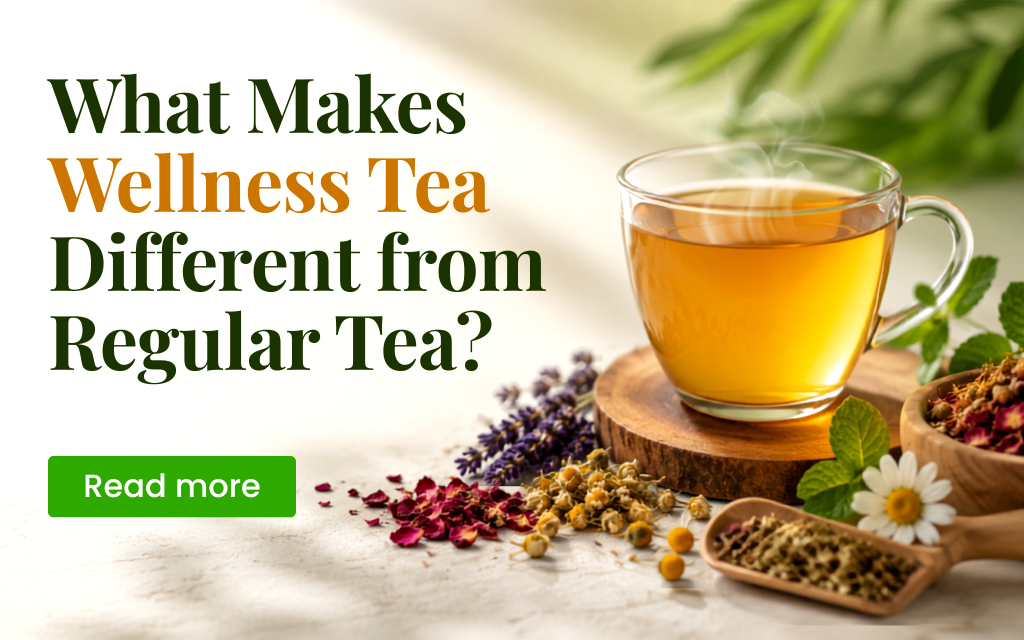
What Makes Wellness Tea Different from Regular Tea?

Summary
Wellness tea differs from regular tea not because it is "better," but because it serves a different purpose. While traditional teas such as black tea, green tea, oolong tea, and white tea are primarily appreciated for their origin, flavour, aroma, and tea craftsmanship, wellness teas are often created with specific lifestyle goals in mind-such as relaxation, mindfulness, hydration, balance, or creating healthy daily rituals.
Today's wellness tea category combines centuries-old botanical traditions with modern consumer needs. Whether it is a calming herbal infusion after work, a caffeine-free evening ritual, or a refreshing botanical blend during a busy day, wellness teas are increasingly becoming part of how people manage stress, improve routines, and create moments of pause in fast-moving lives.
Why Are People Talking About Wellness Tea More Than Ever?
A decade ago, wellness products were often associated with niche health stores and dedicated enthusiasts.
Today, wellness has become mainstream.
Modern consumers are increasingly seeking:
-
healthier beverage choices
-
mindful daily rituals
-
reduced sugar consumption
-
alternatives to carbonated drinks
-
moments of calm in busy schedules
This shift has transformed tea itself.
For many people, tea is no longer simply about refreshment. It has become part of a broader wellness lifestyle.
As a result, searches for terms such as:
-
wellness tea
-
herbal tea
-
stress relief tea
-
caffeine-free tea
-
botanical tea blends
have grown significantly worldwide.
What Is Regular Tea?
Before understanding wellness tea, it helps to understand traditional tea.
All true teas come from a single plant:
Camellia sinensis
The differences between tea types arise from how the leaves are processed.
Common Types of Traditional Tea
| Tea Type | Characteristics |
|---|---|
| Black Tea | Full-bodied, oxidized, rich flavour |
| Green Tea | Fresh, grassy, lightly processed |
| White Tea | Delicate and minimally processed |
| Oolong Tea | Partially oxidized, complex flavour |
| Darjeeling Tea | Distinctive terroir-driven tea from the Himalayas |
Traditional tea culture often focuses on:
-
origin
-
harvest season
-
processing methods
-
flavour complexity
-
terroir
Tea enthusiasts may discuss:
-
First Flush vs Second Flush
-
muscatel notes
-
elevation
-
estate provenance
The experience revolves around the tea leaf itself.
What Is Wellness Tea?
Wellness tea typically focuses on the experience beyond the tea leaf.
Many wellness teas contain:
-
herbs
-
flowers
-
roots
-
spices
-
botanicals
-
fruit peels
Some contain tea leaves.
Many contain none at all.
Their purpose is often linked to supporting everyday lifestyle goals such as:
-
relaxation
-
mindfulness
-
emotional balance
-
hydration
-
daily wellness routines
Rather than being consumed solely for flavour exploration, wellness teas are often chosen for how they fit into specific moments of the day.
How Does Wellness Tea Fit Into Modern Life?
Imagine two people.
The first spends ten minutes evaluating the flavour nuances of a premium Darjeeling First Flush tea.
The second brews a caffeine-free herbal infusion after a stressful workday and spends five quiet minutes away from screens.
Both are drinking tea.
But their intentions are different.
This difference highlights the evolution of modern tea culture.
Consumers increasingly choose beverages based on how they want to feel.
Sometimes they seek:
-
energy
-
comfort
-
focus
-
calm
-
restoration
Wellness tea aligns naturally with these intentions.
What Ingredients Are Commonly Found in Wellness Teas?
Unlike traditional tea, wellness blends often draw from a wide variety of botanical ingredients.
| Ingredient | Common Association |
|---|---|
| Chamomile | Relaxation |
| Peppermint | Refreshment |
| Tulsi | Balance & wellness |
| Ashwagandha | Adaptogenic traditions |
| Rosemary | Herbal vitality |
| Ginger | Warmth & comfort |
| Butterfly Pea Flower | Visual appeal & botanical wellness |
| Hibiscus | Bright flavour & refreshment |
| Rose Petals | Floral relaxation |
| Brahmi | Traditional focus-supporting herb |
The appeal often comes from how these ingredients work together to create a sensory experience.
Is Wellness Tea Always Caffeine-Free?
No.
This is one of the biggest misconceptions.
Wellness Teas Can Be:
| Category | Contains Caffeine? |
|---|---|
| Herbal Infusions | Usually No |
| Green Tea Wellness Blends | Yes |
| Black Tea Wellness Blends | Yes |
| Botanical Herbal Teas | Usually No |
Many consumers specifically seek caffeine-free options for evening consumption, but wellness tea itself is not defined by caffeine content.
It is defined more by purpose and formulation.
Why Are Wellness Teas Becoming Alternatives to Sugary Drinks?
Consumer beverage habits are changing rapidly.
Many people are consciously reducing:
-
sugary soft drinks
-
energy drinks
-
heavily sweetened beverages
At the same time, they still want drinks that feel:
-
enjoyable
-
flavourful
-
satisfying
Wellness teas offer an attractive middle ground.
They provide:
-
flavour
-
ritual
-
variety
-
hydration
without requiring excessive sugar or artificial ingredients.
This makes them particularly appealing to health-conscious consumers.
How Do Herbal Wellness Teas Create Daily Rituals?
One of the most interesting developments in wellness culture is the rise of "micro-rituals."
These are small daily practices that help people reset mentally.
Examples include:
-
morning journaling
-
meditation
-
stretching
-
evening walks
-
brewing tea
Tea works exceptionally well because preparation itself becomes part of the experience.
Boiling water.
Watching ingredients steep.
Taking a moment to pause.
The ritual can be just as valuable as the beverage itself.
What Makes Modern Wellness Tea Different from Traditional Herbal Remedies?
Modern wellness tea brands have changed how herbal blends are perceived.
Historically, herbal beverages were often viewed as:
-
medicinal
-
functional
-
unpleasant tasting
Today's premium wellness teas focus equally on:
-
flavour
-
aroma
-
appearance
-
drinking experience
This shift has made wellness teas accessible to a much broader audience.
How Are Premium Brands Redefining Wellness Tea?
Modern tea companies are increasingly creating wellness collections that combine:
-
botanical traditions
-
contemporary flavour design
-
premium ingredients
-
lifestyle relevance
For example, wellness-focused collections such as the Herbyoga range by Golden Tips Tea incorporate carefully curated botanical ingredients designed around modern wellness moments.
Mental Clarity & Calm
Botanicals such as Brahmi, Chamomile, and Butterfly Pea Flower.
Daily Balance
Rosemary, Ginger, Thyme, and Nettle-based blends.
Emotional Well-Being
Tulsi, Chamomile, Peppermint, and Orange Peel combinations.
Stress Management Rituals
Ashwagandha-inspired herbal infusions.
Caffeine-Free Relaxation
Floral blends featuring Chamomile, Rose Petals, Hibiscus, and Butterfly Pea Flower.
Rather than positioning wellness as a strict regimen, these teas support approachable everyday rituals.
Should You Choose Wellness Tea or Regular Tea?
The answer depends entirely on the moment.
Choose Regular Tea When You Want:
-
flavour complexity
-
tea craftsmanship
-
origin exploration
-
caffeine stimulation
-
traditional tea experiences
Choose Wellness Tea When You Want:
-
relaxation
-
mindful routines
-
caffeine-free options
-
botanical variety
-
slower daily rituals
Many tea drinkers enjoy both.
The categories complement each other rather than compete.
What Does the Future of Wellness Tea Look Like?
The future of tea is becoming increasingly personalised.
Consumers are no longer choosing beverages solely based on flavour.
They are choosing based on:
-
mood
-
occasion
-
lifestyle
-
wellness goals
As a result, wellness tea is expected to remain one of the fastest-growing segments within the global tea industry.
The category sits at the intersection of:
-
health awareness
-
mindful living
-
premium beverage culture
-
botanical innovation
making it highly relevant for modern consumers.
Closing Summary
Wellness tea differs from regular tea because its primary focus extends beyond flavour alone.
While traditional tea celebrates the craft, origin, and character of tea leaves, wellness tea is often designed around lifestyle moments-helping people create rituals of calm, balance, hydration, and mindfulness.
Neither category replaces the other.
Instead, they serve different purposes.
In today's fast-paced world, that distinction is exactly why wellness tea has become an important part of modern tea culture.
Key Takeaways
-
Regular tea is made from the Camellia sinensis plant and focuses on flavour, origin, and craftsmanship.
-
Wellness tea often incorporates herbs, flowers, roots, and botanicals.
-
Wellness teas are commonly associated with relaxation, mindfulness, and daily wellness routines.
-
Many wellness teas are caffeine-free, though not all.
-
Consumers increasingly use wellness tea as an alternative to sugary beverages.
-
Tea rituals are becoming an important part of modern wellness culture.
-
Premium collections like Herbyoga reflect the growing evolution of wellness-focused tea experiences.



