

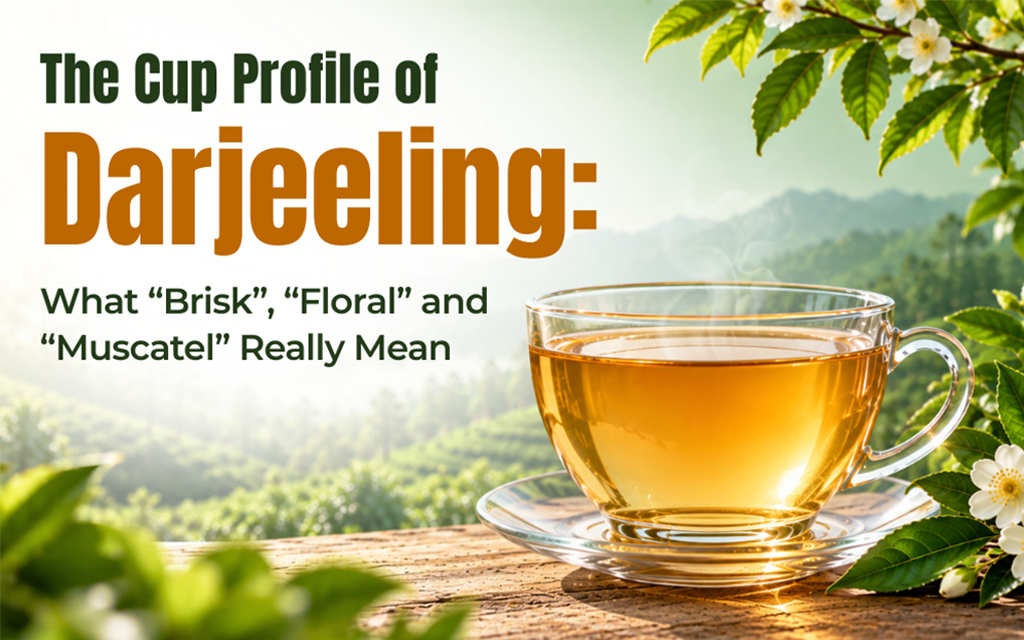
The Cup Profile of Darjeeling: What “Brisk”, “Floral” and “Muscatel” Really Mean

Opening Summary
Darjeeling tea is often described with words such as “brisk”, “floral” and “muscatel”. But these aren't simply elegant words used to make tea sound premium—they describe specific sensory impressions you can look for when drinking the tea.
At Golden Tips, we often find that Darjeeling becomes easier to appreciate once these descriptions are translated into something practical. Briskness refers to the lively, refreshing character of the cup; floral notes describe aromas reminiscent of flowers; and muscatel refers to a distinctive sweet, fruity character particularly associated with certain Darjeeling teas, especially some second-flush teas.
The important thing is that not every Darjeeling tea will show all three characteristics equally. Tea garden, cultivar, harvest, processing and brewing can all influence what eventually appears in the cup.
What Does “Brisk” Mean When Describing Darjeeling Tea?
Brisk is one of the most commonly used words in Darjeeling tea tasting—and one of the easiest to misunderstand.
It doesn't mean bitter.
It doesn't simply mean strong.
In tea tasting, briskness describes a lively, bright and refreshing quality in the cup. It can create a slightly drying or mouth-awakening sensation, giving the tea energy rather than heaviness.
This is one reason Darjeeling can feel quite different from a full-bodied Assam.
Think of briskness as:
-
Lively
-
Bright
-
Refreshing
-
Slightly astringent
A brisk tea leaves your mouth feeling refreshed rather than coated with a heavy sensation.
Tea Board India includes “lively” and “brisk” among the recognised sensory characteristics used to describe Darjeeling teas.
What Should You Notice?
Take a sip of Darjeeling without milk or sugar.
Instead of concentrating only on flavour, notice what happens after you swallow.
-
Does the cup feel bright?
-
Does your mouth feel refreshed?
-
Is there a gentle drying sensation?
That is where you may be experiencing briskness.
What Does “Floral” Mean in Darjeeling Tea?
When a tea is described as floral, it doesn't mean that flowers have been added to it.
Floral is a tasting description.
It refers to aromas or flavours that remind the taster of flowers.
Depending on the tea, these impressions might suggest:
-
Fresh flowers
-
Rose-like aromas
-
Jasmine-like notes
-
Sweet blossoms
-
Light, perfumed fragrances
The exact floral character can vary considerably between teas.
This is why aroma is particularly important when drinking Darjeeling.
Try This Simple Test
Before taking your first sip:
-
Smell the dry leaves.
-
Then smell the brewed tea.
-
Finally, taste it.
You may notice that the aroma gives you clues about the flavour before the tea even reaches your palate.
For many Darjeeling teas, aroma is a significant part of the experience, rather than an afterthought.
What Does “Muscatel” Actually Mean?
This is probably the most misunderstood word associated with Darjeeling.
Muscatel is used to describe a distinctive sweet, fruity character associated with some Darjeeling teas.
The term is linked to the flavour impression of muscat grapes, rather than indicating that grapes or grape flavouring have been added to the tea.
That distinction is important.
When tea professionals describe a Darjeeling as having muscatel character, they are describing a sensory impression created by the tea itself.
What Can Muscatel Character Suggest?
Depending on the tea, you may perceive impressions that are:
-
Sweet
-
Fruity
-
Grape-like
-
Ripe
-
Richly aromatic
But muscatel isn't a guaranteed characteristic of every Darjeeling tea.
It is particularly associated with certain second-flush Darjeeling teas, although the exact character varies with garden, season, cultivar, processing and other factors.
Why Is Muscatel Particularly Associated With Darjeeling?
This is where the story gets more interesting.
Darjeeling tea isn't a single uniform product. The region produces teas across different harvest periods, commonly referred to as flushes.
The first flush and second flush can produce noticeably different cup profiles.
First Flush
The first flush is the spring harvest.
These teas are often associated with:
-
Freshness
-
Delicacy
-
Floral aromas
-
Briskness
Second Flush
The second flush follows later in the season and is particularly famous for teas displaying richer, more developed flavour profiles, including the muscatel character for which Darjeeling is renowned.
That doesn't mean every second-flush tea will taste strongly of muscat grapes.
It means that the conditions and tea characteristics associated with this period can produce the sensory profile that tea drinkers recognise as muscatel.
Are “Brisk”, “Floral” and “Muscatel” Three Different Flavours?
Not exactly.
This is an important distinction.
They describe different aspects of the sensory experience.
| Term | What it describes | What you might perceive |
|---|---|---|
| Brisk | Mouthfeel / cup character | Lively, bright, refreshing, slightly drying |
| Floral | Aroma / flavour | Flower-like, perfumed, fragrant |
| Muscatel | Distinctive flavour character | Sweet, fruity, grape-like, aromatic |
A single Darjeeling tea can show more than one of these characteristics.
For example, you might encounter a tea that is:
Floral on the nose → brisk on the palate → fruity towards the finish.
That's part of what makes Darjeeling interesting.
Why Doesn't Every Darjeeling Tea Taste the Same?
Because Darjeeling is an origin, not a single flavour profile.
The region contains numerous tea gardens and produces teas across different harvests.
The final cup can be influenced by:
-
Tea garden
-
Elevation
-
Cultivar
-
Harvest period
-
Weather
-
Leaf standard
-
Processing method
-
Oxidation
-
Brewing method
Tea Board India defines Darjeeling tea geographically and recognises its characteristic taste, aroma and mouthfeel as part of its identity. Genuine Darjeeling tea must come from registered gardens within the defined production area.
This is why two Darjeeling teas can both legitimately carry the name Darjeeling while tasting noticeably different.
Why Does the Same Darjeeling Tea Sometimes Taste Different at Home?
Before deciding that a tea has changed, look at the brewing.
Tea is sensitive to preparation.
Two people can use the same leaves and produce different cups simply by changing:
-
Amount of tea
-
Water temperature
-
Steeping time
-
Water quality
-
Vessel
-
Serving temperature
Over-brewing can exaggerate astringency and make a tea seem harsher than intended.
For a delicate Darjeeling, careful brewing can make it easier to notice its aromatic qualities.
Our Simple Advice
Start lighter.
Use the brewing guidance supplied for your particular Darjeeling rather than assuming that every black tea should be brewed in exactly the same way.
Then adjust according to your palate.
Should Darjeeling Tea Be Drunk With Milk?
If your goal is to understand its cup profile, start without milk.
Milk can soften or mask some of the tea's more delicate aromatic and brisk characteristics.
This doesn't mean you cannot drink Darjeeling with milk.
It simply means that if you're trying to understand why people describe a particular Darjeeling as floral, brisk or muscatel, tasting it plain gives you a better opportunity to notice those characteristics.
At Golden Tips, this is one of the easiest ways we recommend approaching a new Darjeeling.
Taste first. Add milk later if you prefer it that way.
How Can You Taste Darjeeling Like a Tea Professional?
You don't need professional tasting equipment.
Try this simple five-step approach.
1. Look
Observe the brewed liquor.
Notice its colour and clarity.
2. Smell
Bring the cup close and identify the first aroma that comes to mind.
Don't worry about getting the terminology “right.”
3. Sip
Take a small sip and let it move across your palate.
4. Wait
Pay attention to what happens after you swallow.
-
Is it brisk?
-
Drying?
-
Sweet?
-
Lingering?
5. Describe
Now try putting the experience into words.
You might arrive at something as simple as:
“Floral aroma, brisk cup, sweet fruity finish.”
That is already a useful tasting note.
Does “Muscatel” Mean the Tea Contains Grapes?
No.
This is worth stating clearly.
A Darjeeling tea described as muscatel does not mean that grape flavouring has been added.
It is a sensory descriptor referring to a flavour reminiscent of muscat grapes.
Similarly, when we describe a tea as floral, we aren't saying flowers were added to it.
These are ways of communicating what the tea reminds your senses of.
That distinction is important when reading tea descriptions.
Can a Beginner Actually Taste These Differences?
Yes—but don't expect to identify everything immediately.
Tea tasting isn't a test.
If you drink a Darjeeling and simply think:
“This tastes lighter and more aromatic than my usual chai,”
you've already identified an important difference.
With repeated tasting, your palate becomes more familiar with specific characteristics.
A useful exercise is to compare:
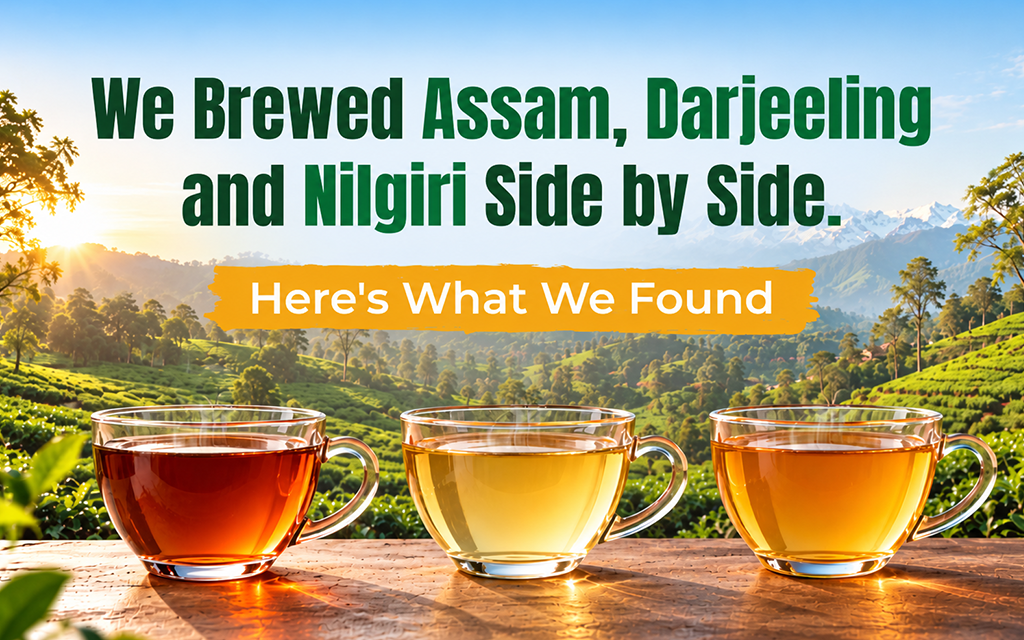
Assam → Darjeeling
rather than tasting Darjeeling in isolation.
The contrast makes the difference in body, aroma and briskness easier to notice.
Then compare:
Darjeeling First Flush → Darjeeling Second Flush
That is where the idea of seasonal variation starts becoming much more tangible.
What Should You Look for on a Darjeeling Tea Label?
If you're buying Darjeeling to explore its character, don't stop at the word “Darjeeling.”
Look for information such as:
| Information | Why It Matters |
|---|---|
| Garden / Estate | Identifies the tea's origin more specifically |
| Flush / Harvest | Indicates when the tea was picked |
| Tea type | Helps establish the expected style |
| Leaf grade | Provides information about the physical leaf |
| Tasting notes | Gives you an idea of the expected cup |
| Brewing guidance | Helps you get the intended experience |
This is one of the reasons detailed tea descriptions matter to us at Golden Tips.
The more accurately a tea is described, the easier it becomes for a consumer to choose something that matches their palate.
So, What Do “Brisk”, “Floral” and “Muscatel” Really Tell You?
They give you three different ways of understanding the same cup.
Brisk tells you about the tea's lively, refreshing character.
Floral tells you about its aromatic side.
Muscatel points towards a distinctive sweet, fruity character associated particularly with certain Darjeeling teas.
None of these words tells you everything.
And that's exactly why Darjeeling remains so fascinating.
The next time you see these terms on a Darjeeling description, don't just read them as marketing language. Brew the tea. Smell it. Taste it. Wait for the finish.
Then see if you can find them yourself.
Conclusion: Learning Darjeeling One Sip at a Time
Darjeeling doesn't need complicated language to be interesting.
The terminology simply gives tea drinkers a better vocabulary for something they can experience themselves.
Brisk describes the lively, refreshing sensation of the cup.
Floral points towards its fragrant, flower-like character.
Muscatel describes the distinctive sweet, fruity impression that has become one of Darjeeling's most recognisable tasting characteristics.
But these aren't fixed ingredients or guarantees. A Darjeeling tea can be more floral than brisk, more delicate than fruity, or show a completely different balance depending on its garden, harvest and production.
At Golden Tips, that's what makes exploring Darjeeling worthwhile.
Don't try to taste what the label tells you to taste. Taste first—and use the words to understand what you're experiencing.
Because once you know what brisk, floral and muscatel mean, a cup of Darjeeling becomes a little easier to read.
Key Takeaways
-
Brisk = lively, bright and refreshing, often with some astringency.
-
Floral = an aroma or flavour reminiscent of flowers.
-
Muscatel = a distinctive sweet, fruity, grape-like sensory character associated with some Darjeeling teas.
-
Muscatel character is particularly associated with certain second-flush Darjeeling teas.
-
Not every Darjeeling tea will show all three characteristics.
-
Garden, elevation, cultivar, harvest, processing and brewing can all affect the final cup.
-
For tasting Darjeeling's character, start without milk.
-
The best way to understand tea terminology is to taste first and describe second.