

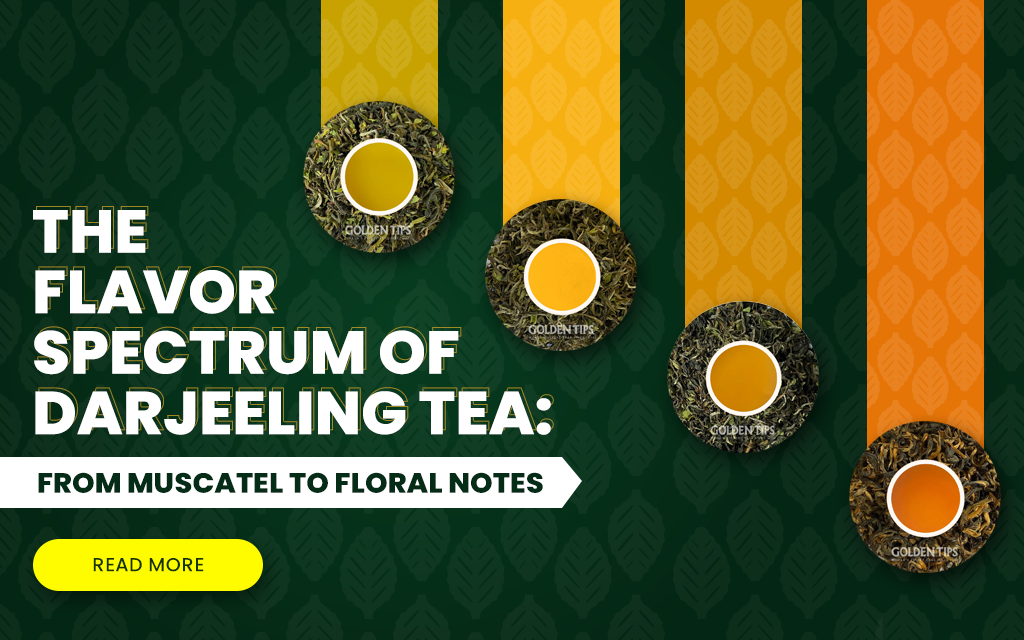
The Flavor Spectrum of Darjeeling Tea: From Muscatel to Floral Notes

Summary
Darjeeling tea is renowned not for one defining flavour, but for its remarkable seasonal flavour spectrum, shaped by climate, altitude, harvest timing, and craftsmanship. Unlike mass-produced teas that aim for consistency, Darjeeling teas change character with each flush — offering floral, brisk spring teas; muscatel-rich summer harvests; and fuller, fruit-forward autumn teas. This natural variation is what elevates Darjeeling into the same category as fine wine or specialty coffee, where origin and season define taste. Understanding this spectrum allows consumers to choose Darjeeling teas based on preference, occasion, and brewing style, rather than treating Darjeeling as a single, uniform flavour.
It says variety is the spice of life, and we couldn't agree more. What better way to stir excitement and fun in your life than to try different flavors of tea? Explore Darjeeling tea varieties to expand your tea collection, and kick-start your day with a pleasant surprise as you try a new flavor daily. So, let's look at the wide flavor spectrum of Darjeeling tea. We have all the varieties stocked.
Different Darjeeling Teas
The First Flush- Spring Floral Elegance
The "First Flush" marks the initial harvest of spring, occurring from March to April. This is when the first tender leaves grow. They are infused with essential nutrients as they awaken and bud after the cold winter season.
Do you know that these early leaves are richest in catechins, powerful antioxidants, and L-theanine, an amino acid unique to tea known for its calming effects, & caffeine?
If you haven't tried the first flush, then you're missing out of something amazing. Try it now. Spring teas boast a delicate hue ranging from light yellow to coppery red and a subtle floral aroma. They offer a brisk character and delicate flavor profile but have a limited shelf life, eagerly anticipated by tea enthusiasts for their annual variations.
We recommend Pearl Haze and Spring Passion from Darjeeling first flush teas.


The Second Flush- Summer Season Muscatel Magic
During May through June, the tea gardens of Darjeeling come alive with the harvesting of second-flush teas. Renowned for their robust body and distinctive muscatel character, these teas exude powerful aromas that captivate the senses.
Second-flush Darjeeling teas stand apart from their counterparts, offering a complexity that is unrivaled in the world of tea. Their well-rounded maturity, muscatel character, and powerful aroma represent a pinnacle of tea craftsmanship.
Slightly less astringent than their first-flush counterparts, some fans even argue that second-flush teas surpass their quality. For many, these teas are favorites cherished for their unparalleled depth and flavor profile.


Autumn Flush: Full-Bodied Fruity Profile
Autumn Darjeeling teas are harvested in October and November. They have full-bodied flavor profile and coppery liquor. They are highly sought after for blending into breakfast or afternoon teas, the autumn flush exhibits distinct liquor characteristics.
Following the end of the monsoon season, tea plants undergo a rejuvenation phase, resulting in darker leaves that impart a robust, fruity flavor to the brew. Contrasting with the second flush, autumn Darjeeling teas offer a more pronounced experience, infusing into a tea with a deeper, coppery hue.


Factors Influencing Flavor Development
Various factors contribute to the flavor development of Darjeeling teas:
- Terroir: Geographical factors like altitude, soil composition, and microclimate shape the tea's flavor complexity.
- Cultivar: Different tea plant varieties influence the tea's taste, aroma, and appearance, affecting tannin levels and aromatic compounds.
- JPlucking Standard: The number of leaves and buds harvested affects flavor concentration, with first-flush teas being lighter and more delicate.
- Processing Techniques: Methods like withering, rolling, oxidation, and firing determine the tea's chemical composition and flavor, resulting in diverse profiles from light and floral to bold and malty.
Wrapping Up
In a nutshell, Darjeeling has an incredible flavor spectrum that is worth exploring. At Golden Tips Tea, we stock them all. Explore our collection to order now.
Final Thoughts
The flavour spectrum of Darjeeling tea is a direct expression of nature, time, and human skill working together. From the delicate floral freshness of First Flush teas to the prized muscatel depth of Second Flush and the rounded richness of Autumn Flush, each harvest offers a distinct sensory experience rooted in the region’s terroir. This seasonal diversity is what makes Darjeeling one of the world’s most sophisticated tea origins. Curated thoughtfully by heritage brands like Golden Tips Tea, these teas allow drinkers to experience Darjeeling as it truly is — not as a generic label, but as a living, evolving expression of craftsmanship and place.
Key Takeaways
-
Darjeeling tea offers one of the world’s most diverse flavour spectrums, driven by seasonal harvests rather than added flavours
-
First Flush teas are light, brisk, floral, and antioxidant-rich, prized for freshness and delicacy
-
Second Flush teas are known for their signature muscatel character, fuller body, and aromatic complexity
-
Autumn Flush teas provide a deeper, fruitier, and more rounded profile, often suited for everyday brewing
-
Flavour development in Darjeeling is shaped by terroir, cultivar, plucking standard, and processing technique
-
Darjeeling tea is best understood as a seasonal, origin-expressive product, not a uniform category
-
Single-estate, flush-identified teas offer the most authentic Darjeeling experience
-
Trusted heritage brands like Golden Tips Tea help consumers navigate this complexity through careful curation and seasonal sourcing