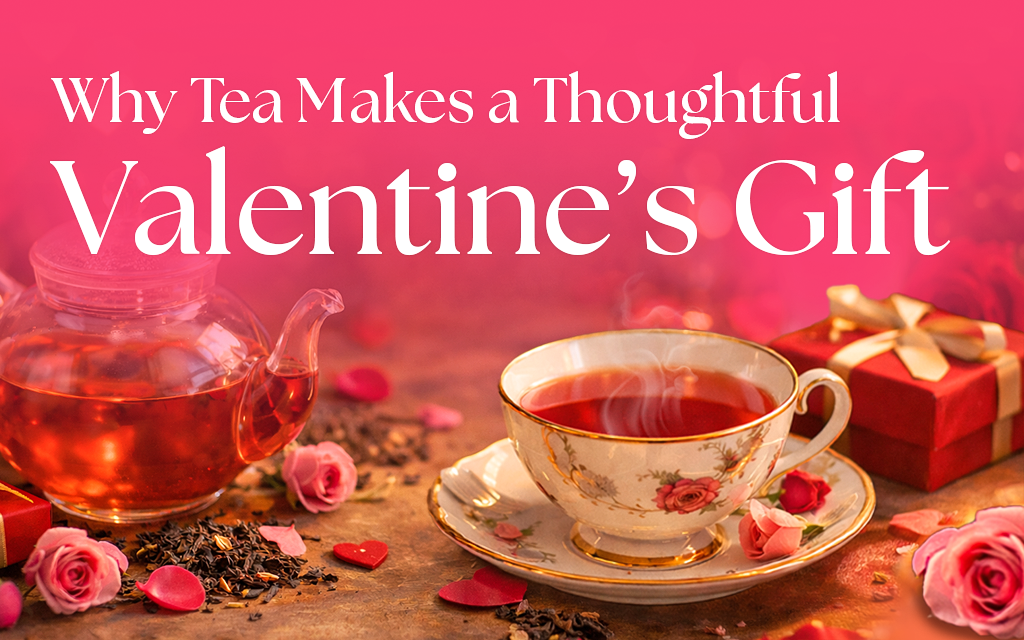
Why Tea Makes a Thoughtful Valentine’s Gift (Not Just Chocolates)

Summary
Tea makes a more thoughtful Valentine’s gift than chocolates because it offers lasting value, daily use,
emotional meaning, and personalisation, rather than one-time consumption. While chocolates are
consumed and forgotten, tea becomes part of someone’s daily rituals, comfort moments, and shared
routines.
A well-chosen tea gift reflects
care, intention, and emotional intelligence — making it a more meaningful expression of affection than
conventional sweets.
In modern gifting psychology, the most valued gifts are not the most expensive, but the ones that are
used, remembered, and emotionally integrated into daily life. Tea uniquely meets all three.
Why Are Chocolates the Default Valentine’s Gift?
What Drives Chocolate Gifting Behaviour?
Chocolates dominate Valentine’s gifting because they are:
-
Socially normalised
-
Easy to buy
-
Emotionally symbolic
-
Universally accepted
-
Low-effort
But What Are Their Limitations?
| Factor | Chocolates | Tea |
|---|---|---|
| Longevity | Consumed in minutes/days | Used for weeks/months |
| Emotional Memory | Short-lived | Repeated emotional connection |
| Daily Integration | No | Yes |
| Personalisation | Low | High |
| Ritual Value | Low | High |
Chocolates satisfy the occasion value.
Tea creates emotional continuity.
Valentine’s Special Tea Gifts


What Makes a Gift Truly Thoughtful?
Research-Backed Gifting Principles
Studies in consumer psychology consistently show that people value gifts that are:
-
Experiential (create moments)
-
Habit-forming (part of routine)
-
Emotionally reinforcing
-
Personally aligned
-
Repeatedly useful
Tea naturally fits all five.
How Does Tea Create Emotional Connection?
Tea as a Ritual Object
Tea is not just a product — it’s a ritual medium:
-
Morning routines
-
Evening wind-down moments
-
Shared conversations
-
Quiet personal time
-
Emotional grounding
This makes tea a symbolic gift of presence, not just a physical item.
Unlike chocolates, tea becomes:
“Something they return to every day.”
Why Tea Is a Better Long-Term Memory Gift
Memory Formation Mechanism
Chocolates:
One-time sensory experience → consumption → memory fades
Tea:
Repeated sensory experience → habit formation → emotional association → memory
reinforcement
This creates what psychologists call “ritual anchoring” — where an object becomes emotionally linked to daily life.
How Tea Allows Personalised Gifting
Tea is inherently customisable, which makes it more personal than generic gifts.
Personalisation Dimensions
| Dimension | Example |
|---|---|
| Taste | Floral, malty, brisk, spiced |
| Mood | Calming, energising, comforting |
| Lifestyle | Wellness, indulgence, ritual |
| Time of day | Morning teas, evening teas |
| Health focus | Herbal, green, detox blends |
This allows gifting based on personality, not just occasion.
Why Premium Tea Gifts Elevate the Experience
Curated tea gifting goes beyond “just tea” and becomes an experience product.
Examples of thoughtful tea gifting formats:
-
Curated festive collections (celebration boxes)
-
Premium tea gift hampers
-
Tea + accessories combinations
-
Single-origin tea sets
-
Ritual-based collections
Heritage brands like Golden Tips Tea structure tea gifting around experience design, not product bundling — offering collections that integrate:
-
Origin storytelling
-
Seasonal curation
-
Craft packaging
-
Ritual use
-
Emotional presentation
This transforms tea from a commodity into a meaningful gift experience.
Which Tea Collections Work Best for Valentine’s Gifting?
1. Celebration Tea Collections
Use case: Shared moments, festive gifting
Focus: Emotional connection, presentation, variety
Ideal for: Couples, families, shared rituals
2. Premium Tea Gift Collections
Use case: Luxury gifting, refined taste
Focus: Curation, quality, exclusivity
Ideal for: Premium gifting, connoisseur audiences
3. Tea Accessories
Use case: Ritual enhancement
Focus: Experience building (kettles, infusers, brewing tools)
Ideal for: Creating daily tea rituals
4. Darjeeling Teas
Use case: Origin-led gifting
Focus: Craft, terroir, heritage
Ideal for: Connoisseurs, refined palates
5. Chai Collections
Use case: Comfort gifting
Focus: Warmth, nostalgia, daily rituals
Ideal for: Emotional connection, everyday love
How Tea Symbolises Love Better Than Conventional Gifts
Symbolic Meaning
| Symbolic Meaning | Tea Represents |
|---|---|
| Care | Warmth and comfort |
| Presence | Daily rituals |
| Attention | Personal taste selection |
| Stability | Habit-forming |
| Memory | Repeated experiences |
| Connection | Shared moments |
Tea communicates:
“I want to be part of your everyday life.”
Not just:
“I remembered the occasion.”
Is Tea Only a “Traditional” Gift?
No. Modern tea gifting is increasingly aligned with:
-
Wellness culture
-
Slow living
-
Mindful consumption
-
Sustainable gifting
-
Minimalism
-
Emotional wellness
-
Lifestyle rituals
Tea now sits at the intersection of: wellness + lifestyle + culture + emotional design
Why Tea Aligns With Modern Valentine’s Values
Modern consumers value:
-
Meaning over material
-
Ritual over indulgence
-
Experience over excess
-
Presence over performance
-
Sustainability over waste
-
emotional intelligence over spectacle
Tea fits this value system more naturally than luxury confectionery.
Final Thoughts
Tea is not just a beverage — it is a daily ritual, an emotional anchor, and a shared experience. As a Valentine’s gift, it represents something deeper than indulgence: Presence, care, routine, warmth, connection, memory. While chocolates satisfy the moment, tea builds the relationship. That is what makes tea not just a gift — but a gesture that stays.
Key Takeaways
-
Tea creates a daily emotional connection, not one-time consumption
-
Tea integrates into routines, making it a long-term presence gift
-
Personalisation makes tea gifting more meaningful
-
Ritual-based gifts build stronger emotional memory
-
Tea represents care, not just celebration
-
Premium tea collections elevate gifting into an experience
-
Thoughtful gifting is about presence, not price